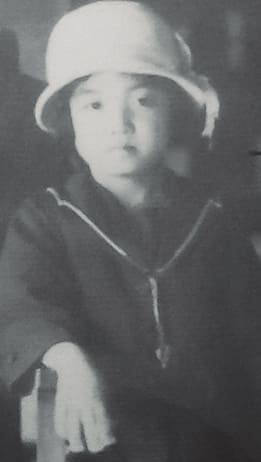
May 3rd, 1926. Mokpo, Korea.
At dawn, your eyes open. You have been in bed in half-sleep through the entire night, restless, agitated and fatigued. Your wife slept soundly as she does, her body so still, save for the gentle rise and fall of her chest through each passing hour. In the other room you hear your daughter Jin-Gil faintly sigh as she begins to stir. Outside the first birdsong begins to press through the silence. The morning light slowly diffuses its illumination through the beige canvas window shade. You watch as the room transitions through lighter and lighter gradations every three, seven, fifteen minutes. You are tired now, but cannot rest.
It is another day. How do you keep enduring these days? The body weak, the mind full of fog, the heart broken. As you lie there in bed this morning, you recall the options — there is only one left to you. When can you leave everything behind? No one here knows just how deeply you have fallen. No one sees, no one asks. You keep silent vigil, hiding them in plain sight under the expectation that you rise each day like a specter to meet the obligations of your family, your father — your lineage. This small, filial son, it was decreed by the Heavens, and so it will be.
You lie there in bed and notice how your body feels both frail and heavy. Your awareness hovers outside of the body and you notice how almost immaterial your limbs, muscles, and bones feel, and yet also how weighted. It is hard sometimes to even lift your arm and reach for your glasses at the bedside. They rest atop an envelope that is stamped with the letters “PK.” You must write your friend back. He sent you a manuscript of poems months — or days? — ago. Did you respond yet? You can’t remember. You despise how much you cannot remember these days, walking around in this disembodied trance.
The silence of the morning is broken by the cries of your son, Bang-Han. Your wife rises so quickly to tend to him, it is a wonder that she was asleep at all. He is just an infant, yet how everyone pours so much more love into him than Jin-Gil. How ridiculous, this blind preference of boys over girls, this unquestioned reverence given to the male sex, the heirs, the holders of dignity, nobility, and power over all others. Sometimes you feel enflamed seeing all the ways this gender prejudice and mindless obedience to tradition serves only to stifle any possibility for societal progress and human evolution. Your own suffering under the oppressive forces of tradition have made you empathetic toward the plight of women. You long for freedom from your family just as you wish to see the rise of the woman in Joseon. And yet, you are aware of the ways your own conditioning under patriarchy has kept you trapped and upholding these same systems. A reminder of yet another fact of life you did not choose.
It is why you have loved her — the one who embodies this vision and the promise of Joseon’s New Woman. The one whose nature was to buck the systems that sought to contain her; the one who chose to live in accordance with her truth, and in doing so, was persecuted. She was the one from the North, her name now sullied, ruthlessly tossed about in the Joseon gossip columns. That one—who is now pariah, fugitive, specter.
But this morning, you do not wake next to her.
This morning, your wife is still trying to quiet your son as his cries roll into wails. Now Jin-Gil is awake. You bring yourself to also rise your heavy body out of bed. You dress, then immediately go to your study, a separate enclave, where you can hide in the refuge of books and words and thoughts. In silence, you sit and wait for the fog of your mind to burn off, to feel anything other than this numbness. A half hour passes, then an hour. You prepare some tea.
In the distance you can see the quiet town, a few ships are moving through the port, and the mountains are there, their silhouettes stacked in gradually darkening shades of blue. The mountains, how they endure and endure. They are the land that bears witness to the fate of the Joseon people, through invasion, occupation, uprisings, imprisonments, attempted erasure. This is the same scene you have observed for so many years. Nothing has changed, except your will, which now weakens by the hour. The light outside is full and bright, a new day is here.
You pick up a pen, and in the quiet, you write a poem:
Despair (절망 / 絶望)
By chance we met —
and I was deceived again.
As though, before ever I came out into the world,
a promise had been made with you;
and just because we met by chance,
I was deceived again.God — why do you give me such pain?
I knew it was your command —
but what mockery is this now?
What frivolous, pointless game?In the old days, the old times,
somebody tells the tale;
this day, this very hour,
I cry aloud.Why not simply never give?
To give, then take it away —
what heart is this!
Ah — this day, this very hour, I weep:on the wrecked ship
there is no rescue boat.
Whose sin it is, I could not say —
but God, even you
are hard-hearted!
If there is no rescue boat,
why grudge me even a searchlight
no larger than a firefly’s glow.
(1926.5.3)
Silence suspends time and the words settle into your body, which like a mountain, endures and endures. A long breath exhales through your lungs as your hands cover your face, warm and sticky.
There is a knock on the door. The servant says, “Sir, the photographer is here.”
You had forgotten that today there will be pictures taken of the family. The appointment with the photographer had been made by your father weeks ago.
“Yes, thank you. I will be there soon,” you say.
Check yourself in the mirror. You look at your face as a detached observer, wiping the perspiration with a handkerchief. You must go out now and be a father.
A father must be a mountain, you think. But I am more like the sea.
In the main family house, your wife is already there with the children, perfectly dressed. You stand several feet away as the photographer and his assistant stage the space. They are assessing the level of light in the room and drawing the white cotton curtains to soften it. They move the furniture just so, discussing the best camera placement for this family portrait.
You stand there quietly, blankly, hands in pockets. You do not notice Jin-Gil standing across the room looking at you. She is just a daughter, watching her father. Dressed primly, she is quiet and pretty, like a little doll. She observes you through the wordless feeling-sense of a child. She examines you, observes the tenseness in your body. She senses your reserve and also your sadness, just as much as she senses her own deep yearning for your attention and love. But she is not sure if she can go to you, as she has learned that when you want to keep a distance, she must obey it.
In a sudden moment of alertness, you see the girl looking at you.
“Jin-Gil, come here,” you say gently, crouching down and opening your arms.
Your daughter runs to you. You embrace her as she leans her little body in toward yours, just enough to snuggle into the crook of your arm. She does not know that in one month, you will be gone from her life forever.
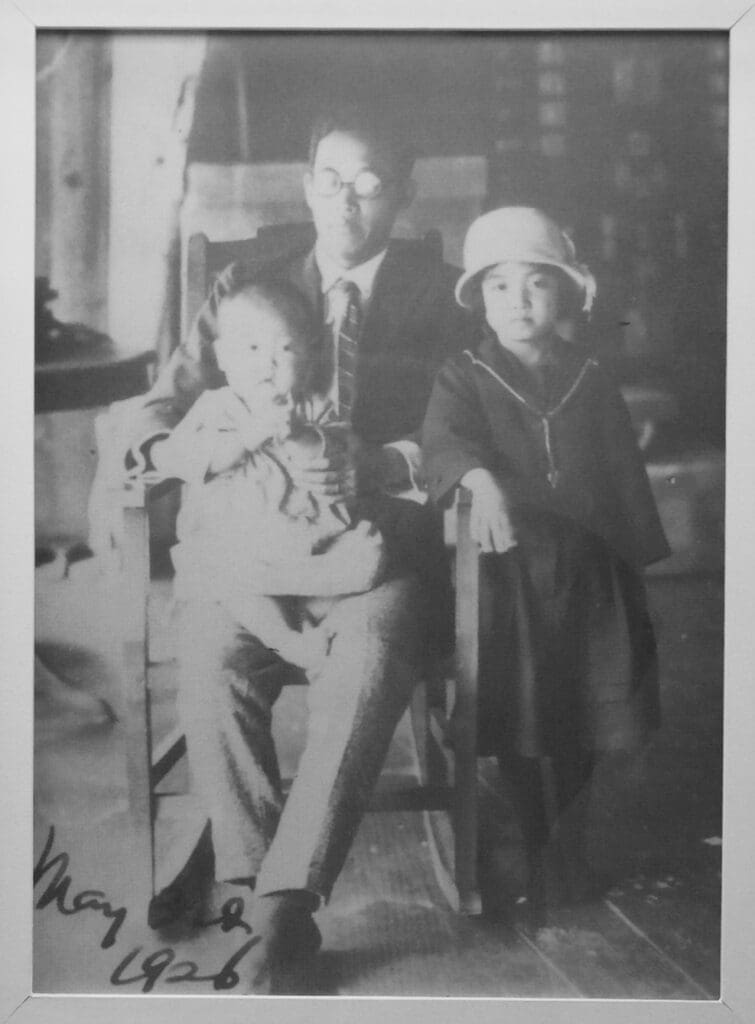
“Sir, we are ready” the assistant says. The photographer asks you to sit in a chair next to the window with the soft light, then invites your wife to join the portrait, but she smiles and politely declines the offer. Instead, she places Bang-Han upright in your lap. Jin-Gil is directed to stand at your left side, her arm is propped onto the arm of the chair.
“That’s it. Now, stay just like that,” her mother says, stepping back and taking in the rare sight of her husband and children together. For just a brief moment, she feels peace, however tenuous, that her family is unified. She is grateful that you have returned home, though you are here in resignation. As your wife, she knows you still harbor longings that she will never be able to fulfill.
The photographer focuses his subjects in the viewfinder. A Click! The portrait of father and his children is taken.
* * *
How little we as children know what goes on in the hearts and minds of our parents. It is only in retrospect as adults that we wonder, reviewing the years spent observing inexplicable actions and reactions. We enter memory through portals of the body, run a forensic analysis to decipher the strange behaviors; decode the energies, affect, and sensations that we had no words for. There was only feeling, a visceral gut pounding sensing the psychological and physical presence of danger and safety, coldness and warmth, disconnection and attunement. On the day this photograph was taken, did Jin-Gil have any idea of what you held inside your heart and mind? Did her body feel the vibrations of your sorrow and despair?
I imagine how years later in her adulthood, in an attempt to understand you, Jin-Gil studied this photograph, then read the poem you wrote on the same day. I imagine how she juxtaposed the image against the words, the visible against the invisible, trying to make sense of what she felt, but what had been impenetrable to her as a child. I imagine how the heartbreak of your disappearance when she was just eight years old nestled itself inside her shadow and trailed her for the rest of her life. I wonder whether this heartbreak was rooted in the profound understanding or in the profound incoherence of the suffering that she — and you — endured and endured.
I will never truly know, because, unlike you, she did not leave behind any poems, diaries, or plays that could help connect the dots of her internal world.
There is only the fact that at the age of thirty, just like you, she felt a very deep despair and took her own life.